-
From Service to the Sidelines: Why Veterans Struggle After Leaving the Forces
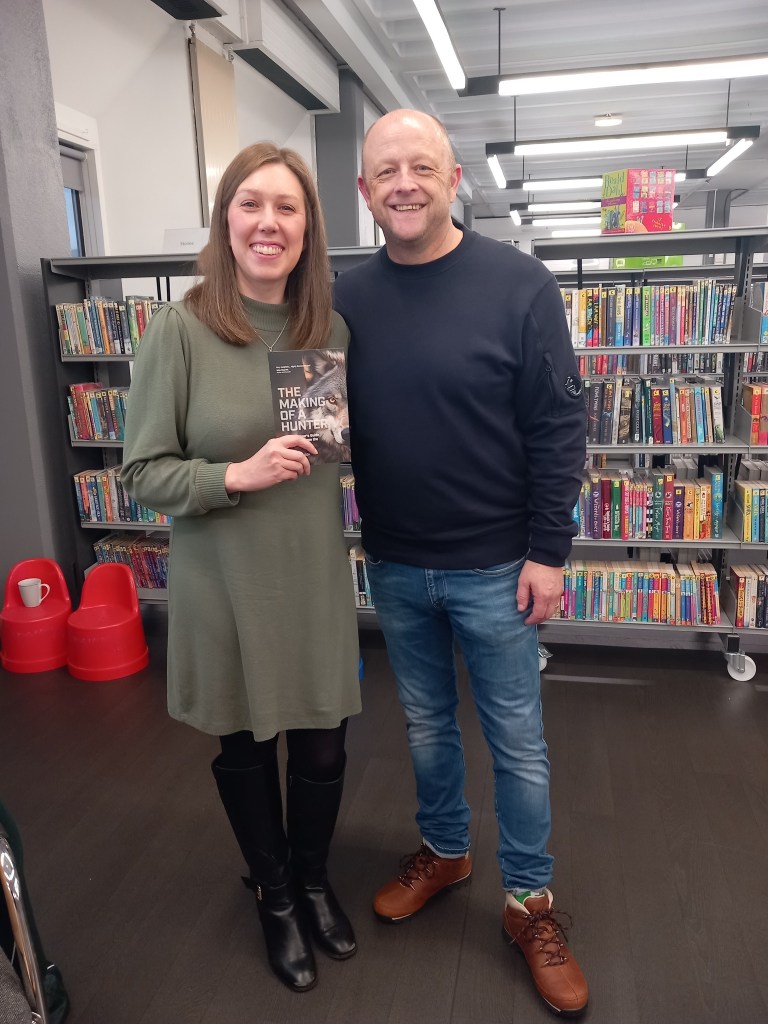
Veteran John Stephenson, along with Gemma Holgate, publisher of Making of a Hunter (Maddison House Press), at Leigh Library. Image Credit: Wigan Libraries. At Leigh Library’s Writing to Remember event, veteran John Stephenson introduced his new book, The Making of a Hunter, aimed at helping ex-service personnel navigate life after leaving the forces. Too many veterans leave the military unprepared, struggling to find meaningful work. Stephenson’s book tackles that gap head-on.
After leaving the military, Stephenson discovered just how tough civilian life could be. Seeing the gaps in official support, he founded the Forces Transition Group (FTG) to guide veterans with mentoring, practical advice, and career support. FTG helps them turn military experience into meaningful employment and a sense of purpose in the civilian world. As Stephenson told the audience, “A lot of veterans are struggling not because of war, but because they can’t fit in.”
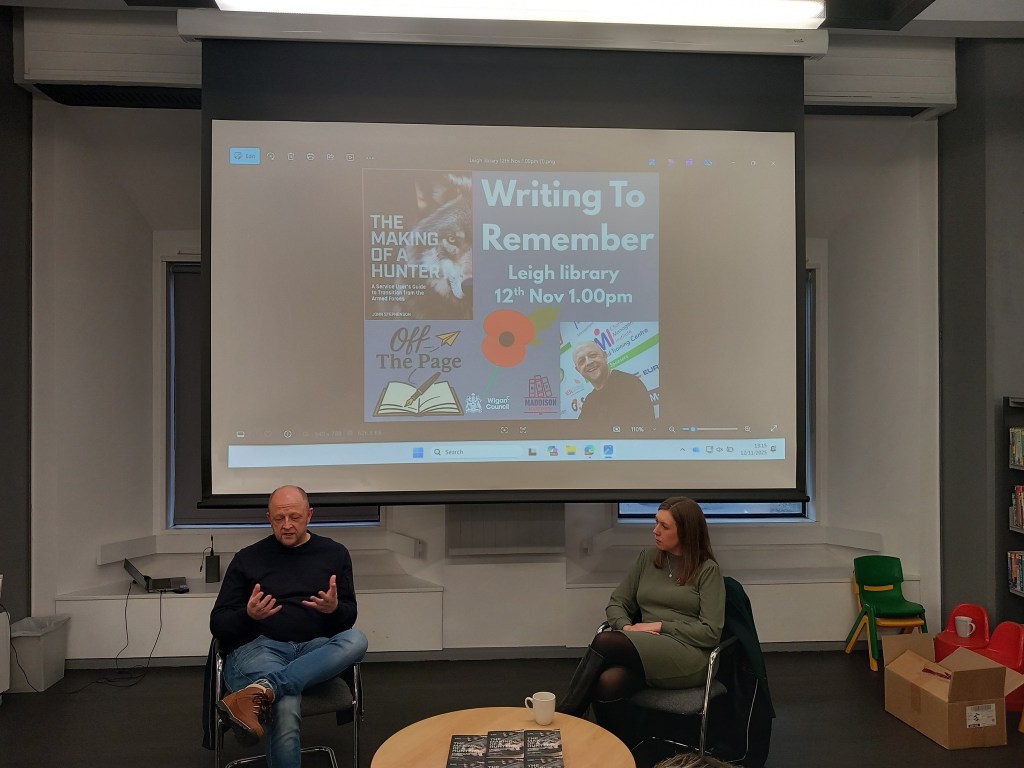
John Stephenson and Gemma Holgate are discussing his book in front of an audience. Image credit: Wigan Libraries. While the military provides official support through the Career Transition Partnership (CTP), offering workshops, one-to-one guidance, and job-finding assistance, it has significant limitations. CTP support lasts only the first two years after leaving service and is often considered only at the very end of a veteran’s career. Participation isn’t mandatory, which means many veterans slip through the net and miss out entirely. A strong believer that a military career is a finite chapter in a veteran’s life, Stephenson emphasises that transition planning should begin from the moment of recruitment, not just at the point of leaving.
The scale of the challenge is clear. In the year ending 31 March 2025, 14,590 people left the UK Regular Armed Forces, with Voluntary Outflow (VO) the most common reason, accounting for 67.7% of departures. These figures show that most veterans leave the forces by choice. The UK Regular Armed Forces Continuous Attitude Survey found that 64% cited the impact of service life on family and personal life as their main reason for leaving. Long deployments take a significant toll: 67% of respondents reported spending up to six months away from home, highlighting the personal sacrifices made and the strain on relationships with loved ones.
Stevenson’s new book, The Making of a Hunter, aims to fill these gaps. Co-written with a ghostwriter, it combines practical advice with the insights from Stevenson’s own military journey. The book helps veterans translate their military skills into value in civilian life, where such experience is often overlooked by employers. Beyond building confidence and guiding career paths, it goes further than the standard CTP programme, offering more than generic advice and instead providing a vital roadmap to success in civilian life. To date, the Forces Transition Group has supported over 45,000 veterans and service personnel.
Even with official schemes like the CTP, many veterans still struggle to find meaningful work. When they do find employment, it is often below their skill or experience level. The 2022 Veterans Survey found that 52.5% of working veterans had taken roles beneath their previous military responsibilities, largely because employers didn’t recognise their skills or because suitable roles were unavailable. This underemployment highlights that leaving the forces isn’t just about landing a job; it’s about finding the right role that values the experience veterans bring.
Leaving the military is a leap into the unknown. Short-term programmes like the CTP can help, but veterans need practical, long-term support. John Stephenson’s The Making of a Hunter and the Forces Transition Group prove that with the right guidance, veterans can move from the sidelines to real success.
The Off the Page series continues at Leigh Library, the next talk features author Maura Jackson: Writing with Many Hats – Next Talk.
Learn More / Connect with John Stevenson
For more on how John Stevenson and the Forces Transition Group (FTG) support veterans transitioning to civilian life, visit FTG Website.
Stay updated with John Stevenson’s work and insights: Instagram | Facebook.
Explore practical guidance for veterans in his new book, The Making of a Hunter: Buy the Book.
Read more: From Service to the Sidelines: Why Veterans Struggle After Leaving the Forces -
Remembering Dr Kamal Gupta, MB, BS.
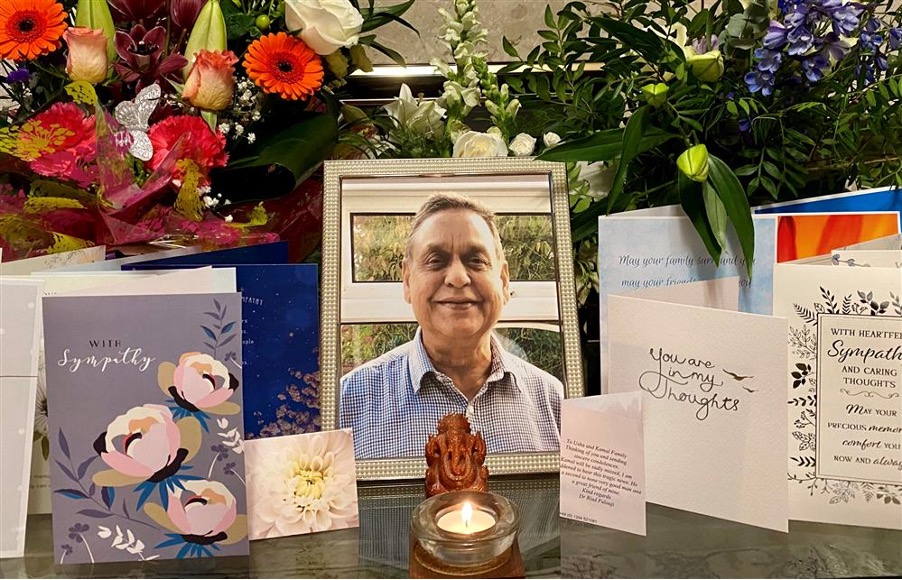
A loving tribute to Dr. Kamal Gupta, surrounded by heartfelt sympathy cards and flowers from family, friends, and the community. For those living in Leigh and the surrounding areas, Dr Kamal Gupta was a familiar and respected figure. A dedicated GP, he served the community with compassion and professionalism until his passing in 2021. His medical career spanned several decades, leaving a legacy of commitment, care, and community spirit.
Born and educated in India, Dr Gupta qualified from MGM College in Indore in the early 1970s. After gaining valuable experience in India, he moved to England in 1974, settling in Birmingham. His wife, Usha, joined him the following year. Although he initially hoped to specialise in orthopaedics, the lack of a consultancy post led him to pursue general practice in 1984, a decision that allowed for meaningful, long-term relationships with patients and ultimately defined his professional life.
Dr Gupta’s life was marked by dedication to both his patients and his family. During a brief return to India, his son Abhay (affectionately known as Monu) was born in October 1972 with cerebral palsy. This personal challenge, faced early in his career, shaped his approach to medicine, instilling in him deep empathy and attentiveness that his patients came to rely on.
Returning to England, which he had come to call home, Dr Gupta continued his career with renewed purpose. In 1991, encouraged by his close friend Dr Tomar, he joined a partnership at College Street in Leigh. There, he became a well-known and trusted figure, valued not just for his medical knowledge but for the genuine compassion he showed.
Kaz Shuttleworth, a former colleague at College Street, shared her memories:
“I remember joining the team of Dr Tomar and Dr Gupta at College Street many years ago. He was a true gentleman, kind-hearted, with a fantastic bedside manner and deep empathy for his patients. He never let personal struggles affect his work, despite family health issues. In a time when doctors could truly listen and care, he stood out. A great man, a good friend, and sadly missed.”
After the partnership dissolved, Dr Gupta moved into Bridgewater Medical Centre, while Dr Tomar continued at College Street for a further year before relocating to Leigh Health Centre in 2010. In 2015, Dr Gupta welcomed Dr Weerasekara as a partner at Bridgewater. Following his retirement in 2020, the practice was renamed Pennington Park Surgery. A year later, Pennington Park merged with Lilford Park Surgery to become Lilford & Pennington Park Surgery.
Reflecting on their time together, Dr Weerasekara said:
“As a junior GP, I learned a great deal from Dr Tomar and Dr Gupta. It was truly a privilege to know them both and to receive training from them. Sadly, Dr Gupta did not get the chance to be with us longer and enjoy his retirement more.”
Dr Kamal Gupta passed away on 2nd February 2021 at Wigan Infirmary, following complications from COVID-19. Practice Manager Michelle Farrell noted that he truly “left his stamp on the patients”, a legacy that continues to shape the practice.
“Being a local GP and moving into a purpose-built medical centre, Dr Gupta naturally attracted many patients, and even today, people still speak very fondly of him. Over the years, some of our medical equipment had worn out, and his family kindly offered to make a donation in his memory. As we considered what would make a fitting tribute to Kamal, our TV media system happened to break down.
We contacted Mrs Gupta to let her know we were planning to replace it. She shared that, after discussing with their son Avinash, now a Consultant at The Christie Hospital, they had decided to fund the full cost of the new system, in memory of Dr Kamal Gupta, husband to Usha and proud father of Abhay (Monu) and Avinash.”
In appreciation of this generous gesture, Dr Weerasekara arranged for a gold-plated memorial plaque to be installed beside the new media system at Bridgewater Medical Centre.
Dr Kamal Gupta will be remembered as a GP who always made time for his patients, listening, caring, and giving his best. His legacy endures in the lives he touched, the surgeries he helped shape, and the community he so faithfully served.
Read more: Remembering Dr Kamal Gupta, MB, BS. -
Off the Page and Into the World Local Publisher Gives Advice on Getting Non-Fiction Published at Local Library
Gemma Holgate, CEO of Madison Press, presents her talk on Writing Non-Fiction That Gets Published. Image credit: Wigan Council.
Local writers gathered at Standish Library on Thursday for Off the Page: Writing Non-Fiction That Gets Published, a workshop led by Gemma Holgate of Madison Press. The session gave practical advice on turning ideas into books, covering everything from the craft of writing to understanding the publishing process and identifying the audience for your work. Attendees left with valuable insights and a fresh perspective on pitching their writing ideas.
Off the Page is a monthly event series held at libraries across the Wigan Borough. Each session focuses on different aspects of writing, from the craft itself to the realities of publishing, as well as insights from recently released books. The series gives local writers a chance to learn, get inspired, and connect with others in the writing community.
Maddison House Press is an independent publisher with a focus on health and well-being, as well as memoirs and biographies. The workshop also highlighted a bigger trend in publishing: non-fiction is on the rise in the UK, especially in digital formats like audiobooks and e-books, while print sales are slowing. People aged 22 to 44 are leading this shift, showing how important it is for writers to know their audience and think about how their work will be read.

A slide from Gemma Holgate’s presentation highlighting her career background before becoming a publisher. Gemma shared her own journey into the publishing world, from emigrating to New Zealand to working as a journalist, where she discovered a passion for human-interest stories. She also drew on her corporate experience with companies like BA Systems and Lancashire County Constabulary, where she focused on coaching and wellbeing. This combination has given her a deep understanding of the power of a story and the importance of connecting with the audience.

A slide from the presentation of Gemma’s five-stage approach to developing a non-fiction book idea. During the presentation, Gemma outlined five stages for developing a strong non-fiction proposal. For point of difference, she stressed the importance of standing out in a competitive market. On connection to the reader, she said, “A book for everyone is a book for nobody,” highlighting the need to define a clear audience. In the journey of change stage, she explained, “There isn’t just meat on the bones, but something that lives and breathes at the end,” showing how a story should evolve. The sharing knowledge stage encourages writers to tell stories, offer lessons, and ask questions, as readers are investing their time and may apply what they learn. Finally, the drive stage reflects a writer’s passion for their project and the energy they bring when presenting to a publisher. Gemma also recounted hearing from writers who were unconcerned about book sales or unwilling to commit to a marketing plan, a scenario she described as a waste of both the writer’s and publisher’s time.
Gemma also emphasised the importance of thinking about publishing from the very beginning of a book. “You should start thinking about publishing right from the beginning of writing a book,” she said. “Ask yourself, what would be the best way to publish my work? Who would I like it to be published by? What is that publisher looking for in a manuscript or proposal? Once you have the answer to those questions you can tailor everything towards meeting that criteria. This is going to increase your chances of getting your work out into the world.”
The talk was a wonderful experience, bringing together writers from across Wigan and even as far afield as the United States. Gemma’s insights, combined with the practical frameworks she shared, gave writers a toolkit to shape their non-fiction ideas and think more strategically about publication. The event at Standish Library also highlighted the important role libraries play in providing welcoming spaces where writers can connect, gain advice, and turn their ideas into books that reach readers. Ultimately, it celebrates local authors and showcases the ways libraries support creativity in the community.
Read more: Off the Page and Into the World Local Publisher Gives Advice on Getting Non-Fiction Published at Local Library
Designed with WordPress

